
Bees are among the most important pollinators in many habitats, and yet very little is known about the vast majority of the species. The Vermont Wild Bee Survey is the first comprehensive effort to document the bee fauna of the Green Mountain State. After two full seasons, we have found more than 300 species of wild bees in at least 36 genera, but believe there are dozens of additional species we are yet to find.
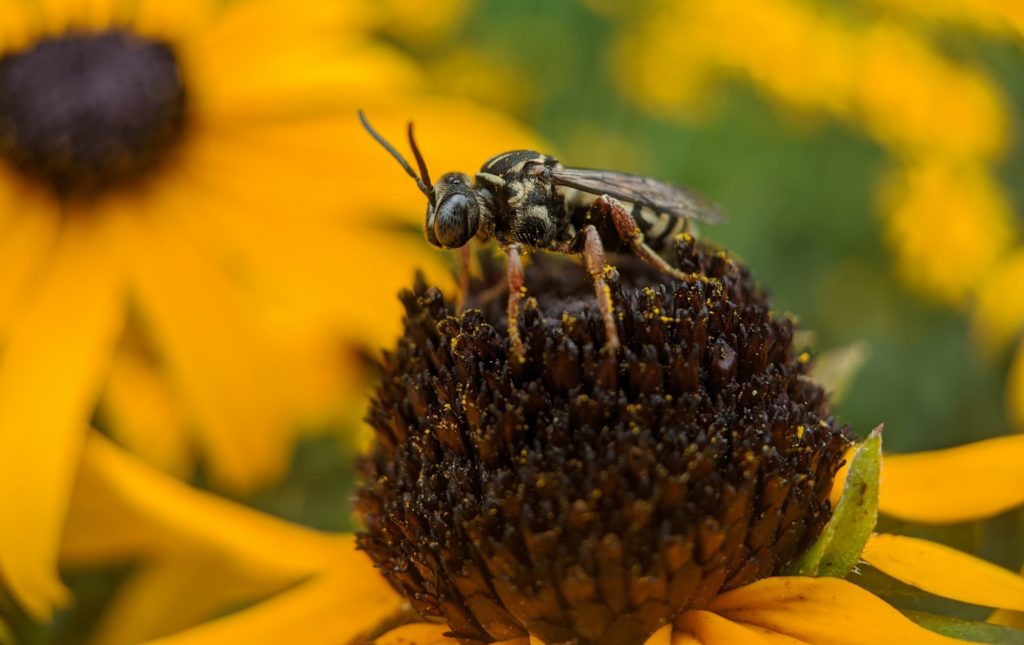
A Longhorn-Cuckoo Bee (Triepeolus sp.)
This guide is intended to introduce the field identifiable bee species of Vermont and help naturalist make sense of the mind-blowing bee diversity found in this state.
Identifying bees has historically been done almost exclusively with pinned specimens and microscopes. As a result, most of the identification information available is difficult to use without significant magnification and experience with entomological terminology. However, as photography equipment improves and websites like iNaturalist and BugGuide become more popular, there is increasing interest in identifying live bees from photographs whenever possible.
Identifying bees can be daunting. Vermont has more than 300 species and some are smaller than a grain of rice. Yet with practice, many genera can be quickly recognized and astute observers will start to notice fascinating natural history happening all around them. Our guide provides the information necessary to dabble in bee watching, whether with a personal camera or through other’s photographs on sites like iNaturalist.
Start your journey and learn how to recognize a Sweat Bee from a Mining Bee, a Carpenter Bee from a Bumble Bee, and even how to quickly recognize the tiny black bees that most people would pass off as gnats.
Join the Vermont Wild Bee Survey on iNaturalist – You don’t have to be an expert or even know the bee species to share your photo-observations! And you can see what others are finding nearby, learn more about the wild bees of Vermont, and read our weekly journal posts from spring through fall alerting you to bees you can discover and document near you.
Interpret with caution – some of the information and species listed below are out of date. A major overhaul of this content is in the works.